Modern Foreign Languages - Chinese (Mandarin)
Overview
GCSE Mandarin Chinese provides students with the opportunity to develop practical language skills and a deeper understanding of Chinese-speaking cultures. Students learn to communicate confidently in spoken and written Mandarin, whilst developing listening, reading, translation and analytical skills. The course promotes global awareness, cultural appreciation and prepares students for further language study and future employment opportunities in an increasingly interconnected world.
The Mandarin Department aims to:
-
Develop students' confidence in communicating effectively in Mandarin across a range of contexts.
-
Build secure knowledge of vocabulary, grammar and language structures required for GCSE success.
-
Foster intercultural understanding and respect for Chinese language, traditions and contemporary society.
-
Encourage resilience, independence and problem-solving through language learning.
-
Develop the four key language skills: Listening, Speaking, Reading and Writing.
-
Provide students with the knowledge and skills needed for successful progression to A-Level languages and future career pathways.
Key Knowledge
-
Core GCSE vocabulary and phonics.
-
Chinese characters and writing systems.
-
Grammar structures and sentence patterns.
-
Translation skills between Mandarin and English.
-
Knowledge of Chinese culture and everyday life.
Key Skills
-
Listening for gist and detail.
-
Speaking accurately and fluently.
-
Reading authentic and adapted texts.
-
Writing for a range of purposes and audiences.
-
Translation and interpretation skills.
Key Values
-
Curiosity and global citizenship.
-
Cultural understanding and respect.
-
Confidence, perseverance and independence.
Curriculum Implementation
Teaching Approach
-
Communicative language teaching with a focus on real-life communication.
-
Regular opportunities for speaking practice and spontaneous conversation.
-
Explicit teaching of vocabulary, grammar and characters.
-
Retrieval practice and spaced repetition to support long-term retention.
-
Use of authentic materials including videos, articles and cultural resources.
-
Integration of cultural learning throughout all topics.
Sequencing of Learning
The curriculum is carefully sequenced to build from familiar personal topics towards more complex and abstract themes. Vocabulary and grammar are revisited regularly, allowing students to deepen understanding and improve fluency over time. Skills are developed progressively through increasingly challenging listening, speaking, reading and writing activities.
Assessment
-
Regular vocabulary and character tests.
-
End-of-unit assessments covering all four skills.
-
GCSE-style speaking assessments throughout Key Stage 4.
-
Mock examinations in Years 10 and 11.
-
Formal tracking and feedback to support progress towards target grades.
Curriculum Impact
Success is measured through:
-
Progress demonstrated in listening, speaking, reading and writing.
-
Performance in internal assessments and mock examinations.
-
GCSE examination outcomes.
-
Increased confidence and willingness to communicate in Mandarin.
-
Student voice indicating enjoyment and engagement with language learning.
-
High-quality written work, accurate use of grammar and increasingly complex language.
-
Participation in enrichment and cultural activities.
Curriculum Structure
Key Stage 4
| Year | Topics / Units | Key Knowledge & Skills |
| 10 | dentity and culture; Family and friends; Technology; Free time; Food and eating out; Customs and festivals; School life | Core vocabulary and characters; present, past and future time frames; opinions and justifications; pronunciation and tones; reading for detail; transactional speaking; paragraph writing; translation skills |
| 11 | Local area and environment; Travel and tourism; Social issues; Future study and employment; Revision and examination preparation | Complex sentence structures; extended speaking responses; authentic reading texts; formal and informal writing; translation accuracy; examination techniques; independent language use across all themes |
Websites:
https://www.mdbg.net/chinese/dictionary
https://quizlet.com/UCLMEP/folders
[Resource] [KS3] [Jinbu 1 & 2] All Lessons | IOE Confucius Institute
AQA GCSE Mandarin Chinese (8673)
https://www.aqa.org.uk/subjects/languages/gcse/chinese-mandarin-8673
Supplementary resources provided to each student – vocabulary book, topic question sheet, topic question booklet
Enrichment
-
Students are encouraged to take the external HSK 3 examination, an internationally recognised Chinese language proficiency test. Achieving this qualification can support future university applications, employment opportunities, and other educational or career pathways with resources provided.
-
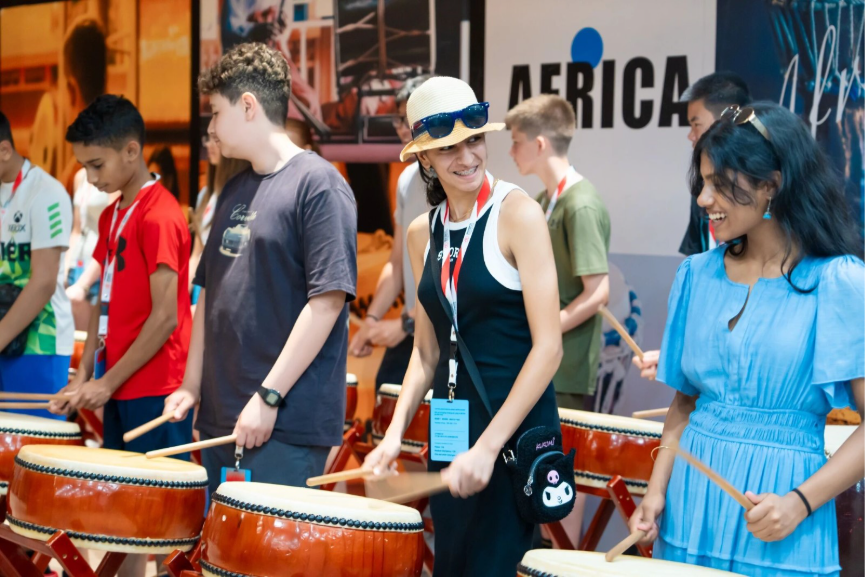
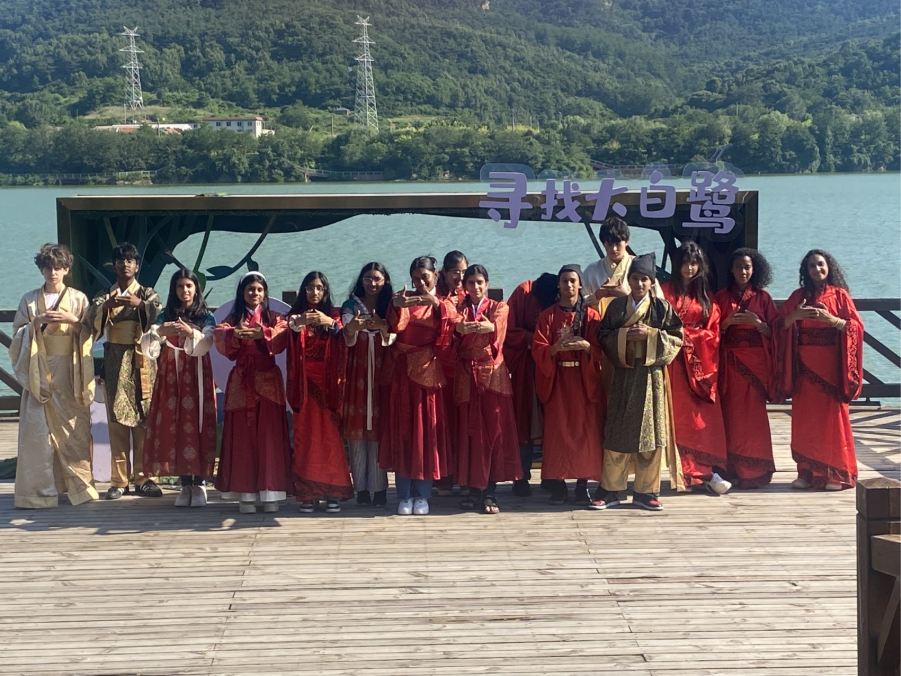
Chinese New Year celebrations.
-
National Chinese Bridge Mandarin Speaking Competition.
-
Students will be paired up with students from secondary school in China during their visit to our school around January or February.
-
Educational visits to universities that provide Mandarin or East Asian language and culture.
-
Opportunities to engage with authentic Chinese media, films and literature.
-
Year 10 students have the opportunity to take part in a three-day intensive Mandarin study programme through the Tourism project. Students collaborate online with teachers and peers from China and subsequently visit a university to present their completed projects.