Modern Foreign Languages - Chinese (Mandarin)
 Overview
At Rooks Heath, we are very proud to offer the national Mandarin Excellence Programme (MEP), an intensive and ambitious language-learning pathway designed to develop high levels of proficiency in Mandarin Chinese. Students choose one language, instead of two, and study for five years until GCSE. They receive double curriculum time (6 timetable lessons and 1 after school twilight lesson every fortnight) during Key Stage 3 and engage in immersive learning experiences to accelerate progress.
Across Years 7–9, students build a strong foundation in phonics (pinyin and tones), character recognition, grammar, and communication skills, progressing towards confident, independent use of the language. The curriculum integrates cultural understanding, enabling students to explore Chinese traditions, society, and global relevance.
Students can expect a structured yet dynamic programme that develops fluency, accuracy, resilience, and cultural awareness.
Curriculum Intent
The Mandarin curriculum aims to:
-
Develop confident communicators in spoken and written Mandarin
-
Build a secure foundation in pinyin (Chinese phonetics), tones, and character writing (Chinese writing system)
-
Equip students with the grammar and vocabulary needed to express ideas clearly across different contexts
-
Foster resilience and independence, recognising the challenge of mastering Mandarin
-
Promote cultural awareness and global citizenship through meaningful cultural study
Key values:
-
Perseverance and discipline
-
Cultural curiosity and respect
-
Confidence in communication
Curriculum Implementation
Teaching Approach
-
Immersive, high-frequency exposure to Mandarin
-
Explicit teaching of phonics, tones, and character formation
-
Use of retrieval practice, repetition, and spaced learning
-
Scaffolded progression towards extended speaking and writing
-
Integration of cultural learning through MEP projects, festivals, and authentic contexts
Sequencing of Learning
-
Year 7 (Jinbu 1): Secure foundations in pronunciation, characters, and simple communication (self, family, school, food)
-
Year 8 (Jinbu 2): Expansion of vocabulary, grammar, and time frames (past, present, future); greater fluency and cultural understanding
-
Year 9: Development of independence, extended responses, and complex language (opinions, justification, identity, technology), preparing for GCSE AQA exam board.
Assessment
-
Regular low-stakes quizzes (vocab test by the end of each topic)
-
Reading and writing tasks with increasing length and complexity
-
Ongoing formative feedback, self- and peer-assessment
-
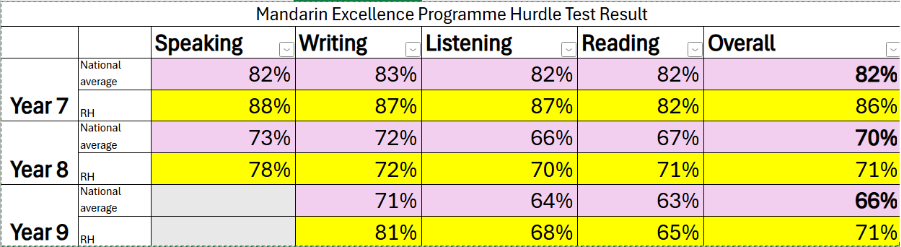
External end-of-year exam by MEP Team called Hurdle Test covering four skills
Curriculum Impact
Success is demonstrated through:
-
Strong progress across listening, speaking, reading, and writing
-
Increasing accuracy in tones, pronunciation, and character writing
-
Ability to produce extended spoken and written responses
-
Confident participation in spontaneous communication
Curriculum Structure
Key Stage 3
| Year | Topics / Units | Key Knowledge & Skills |
| 7 | Autumn Term Unit 1: Foundations (pinyin, tones, strokes, radicals, greetings, numbers, introductions) Unit 2: Family and Home (family members, pets, measure words, dates) Spring Term Unit 3: Hobbies (free time, sports, days of the week) Unit 4: School (subjects, timetable, daily routine) Summer Term Unit 5: Food and Drink (preferences, mealtimes, ordering food) + Cultural learning: Mid-Autumn Festival, Chinese New Year, Lantern Festival, dumpling-making |
- Accurate pronunciation using pinyin and tones - Foundations of character recognition and writing - Basic sentence structures (SVO) - Expressing likes/dislikes - Describing family, hobbies and daily life - Developing confidence in listening and speaking |
| 8 | Autumn Term Unit 1: Holidays (weather, countries, transport, past and future travel) Unit 2: All About Me (appearance, clothes, daily routine) Spring Term Unit 3: Where Do You Live? (town, housing, future plans, jobs) Summer Term Unit 5: Travel in China (cities, directions, tourism, shopping) + Ongoing revision of Jinbu 1 content and cultural themes |
- Use of past, present, and future time frames - Extended vocabulary and sentence structures - Development of paragraph writing - Improved fluency and pronunciation - Stronger character recall and reading skills - Cultural awareness and comparison |
| 9 | Autumn Term All About Me & Identity (appearance, routines, ambitions, work, volunteering) Spring Term School and Technology (school life, mobile phones, internet, advantages/disadvantages) Summer Term Leisure and Future (media, social media, reading, relaxation, careers) + Cultural learning: Mid-Autumn Festival and contemporary China |
- Use of complex sentences and multiple time frames - Expressing and justifying opinions - Greater grammatical accuracy - Extended speaking and writing independently - Increased spontaneity and fluency - Preparation for GCSE-level study |
Enrichment
Students benefit from a rich programme of enrichment opportunities:
-
Mandarin Twilight Lessons (fortnightly): Conversation practice, calligraphy, blooket games
-
Cultural Workshops: Celebrations such as Chinese New Year and Dragon Boat Festival and other festivals
-
Competitions: Participation in events including the Chinese Bridge Mandarin Speech Contest
-
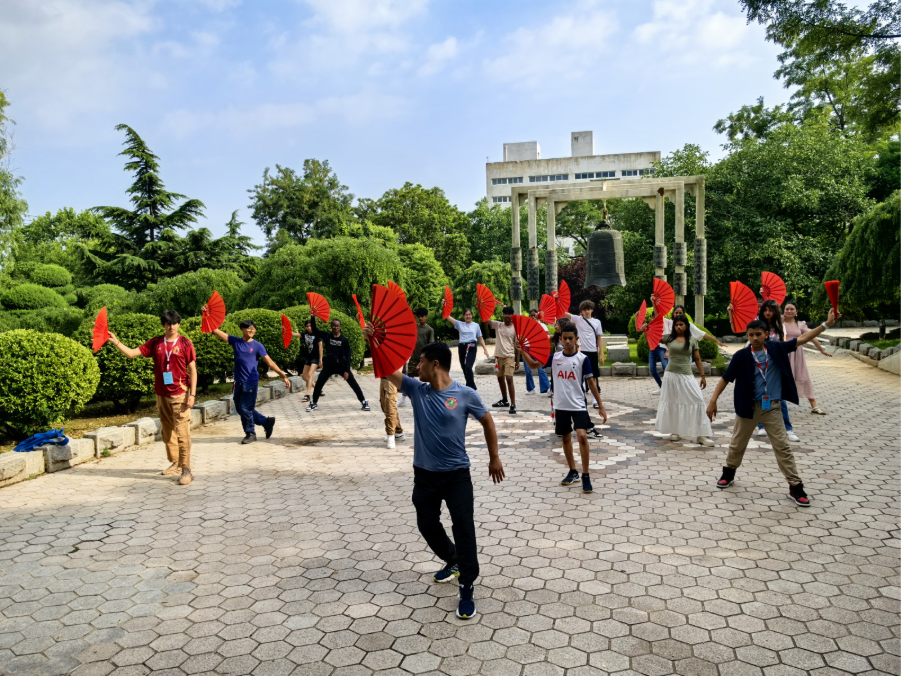
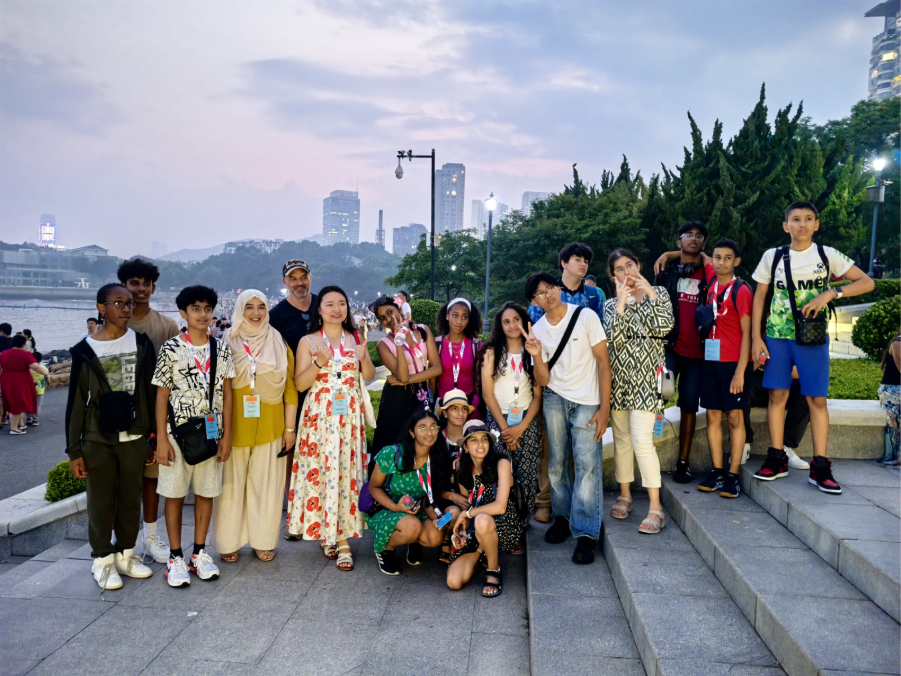
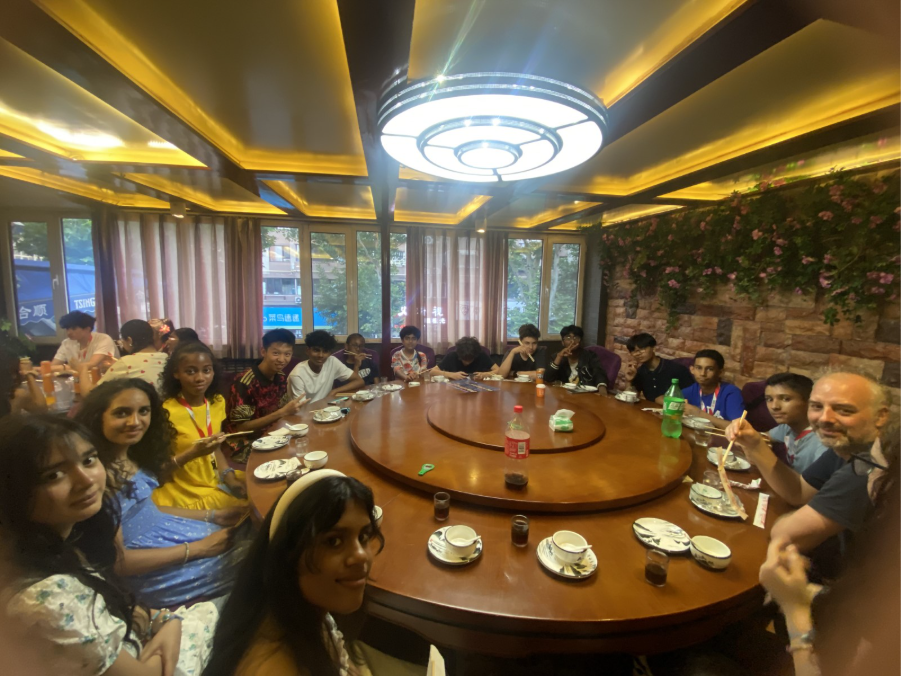
Educational Trips: Visits to the British Museum, Chinatown, and authentic Chinese restaurant in Year 8 and a 12-day overseas residential trip to China partially funded by Chinese government in Year 9.
-
Exchange Programme: Hosting visiting Chinese students annually, with paired language practice
Textbook: Jin Bu 1 ISBN 9780435041137; Jin Bu 2 ISBN 9780435041137
Websites:
http://www.bbc.co.uk/languages/chinese/real_chinese/
https://www.mdbg.net/chinese/dictionary
https://quizlet.com/UCLMEP/folders
[Resource] [KS3] [Jinbu 1 & 2] All Lessons | IOE Confucius Institute