Music

Overview
The Key Stage 4 Music curriculum builds on the skills and knowledge developed in Key Stage 3, fostering creativity, confidence and a lifelong appreciation of music. Students can choose from two pathways:
-
Eduqas GCSE Music
-
Pearson BTEC Level 1/Level 2 Technical Award in Music Practice
Both courses provide opportunities to develop practical, creative and analytical musical skills while preparing students for further study, employment and participation in the wider musical community.
Curriculum Intent
The Music department aims to provide an inclusive curriculum that enables all students to develop as confident musicians, creators and critical listeners.
Students will:
-
Develop performing, composing and appraising skills.
-
Build confidence through practical music-making and collaboration.
-
Use music technology, instruments and digital tools creatively.
-
Gain an understanding of a range of musical styles, genres and traditions.
-
Develop transferable skills including communication, resilience, independence and teamwork.
BTEC Music Practice
-
Ideal for students interested in practical music-making and the music industry.
-
Coursework-based with a strong emphasis on performance, production and vocational skills.
-
Provides insight into industry practices and career pathways.
GCSE Music
-
Suitable for students with established performing skills and musical understanding.
-
Develops expertise in performing, composing and listening across a broad range of music.
-
Provides a strong foundation for A Level Music and further academic study.
Both pathways are carefully sequenced to build knowledge and skills over time, ensuring students are well prepared for assessment and future progression.
Curriculum Implementation
Teaching approach
-
The Key Stage 4 Music curriculum is delivered through a combination of practical, theoretical and creative learning experiences that allow students to develop as confident performers, composers and appraisers. Teaching is highly practical and collaborative, providing opportunities for students to work independently and as part of ensembles whilst applying musical knowledge in authentic contexts. Lessons make extensive use of instruments, music technology and digital audio workstations (DAWs), enabling students to develop technical proficiency and creativity alongside their understanding of musical concepts.
Sequencing of learning
-
Learning is carefully sequenced to build on the knowledge and skills acquired during Key Stage 3. Students progressively develop their understanding of musical elements, genres, structures and industry practices, revisiting and extending key concepts throughout the course. In GCSE Music, students study the four Areas of Study whilst simultaneously developing their performance and composition portfolios. In BTEC Music Practice, students work through the three components in a logical sequence, beginning with exploring music products and styles before developing specialist skills and applying them to a vocational music brief.
Assessment
-
Assessment is both formative and summative. Regular practical performances, compositions, listening activities, written tasks and teacher feedback allow students to monitor and improve their progress. GCSE students complete assessed performance and composition coursework alongside preparation for the listening and appraising examination. BTEC students complete internally assessed coursework and externally assessed components, producing evidence through performances, recordings, presentations and written reflections. Assessment outcomes are used to inform intervention and ensure all students are supported to achieve their full potential.
Curriculum Impact
The impact of the Music curriculum is demonstrated through students’ growing confidence, technical competence and ability to engage critically and creatively with music. Students develop transferable skills including communication, collaboration, resilience, self-discipline, problem-solving and independent learning, which prepare them for further education, employment and lifelong participation in music.
Success is measured through student progress, assessment outcomes, the quality of practical performances and compositions, and students’ engagement with enrichment opportunities. Students are able to analyse and evaluate music using appropriate musical terminology, perform with increasing fluency and accuracy, and create original musical works that demonstrate creativity and stylistic understanding. BTEC students gain valuable insight into industry practices and professional expectations, while GCSE students develop the academic and practical foundations required for further study.
Many students continue their musical journeys through extracurricular activities, instrumental lessons, school performances and progression to Level 3 Music courses. Student voice consistently highlights enjoyment of the practical nature of the subject, opportunities for creativity and the confidence gained through performance and collaborative work.
Curriculum Structure
Key Stage 4
The Key Stage 4 Music curriculum provides students with two pathways: Eduqas GCSE Music and Pearson BTEC Level 1/Level 2 Technical Award in Music Practice. Both pathways have been designed to build progressively upon the skills, knowledge and understanding developed during Key Stage 3 whilst catering for the diverse interests, strengths and aspirations of learners.
| Year | Topics / Units | Key Knowledge & Skills |
| 10 |
BTEC
|
BTEC
|
| 11 |
BTEC
|
BTEC
|
The curriculum balances practical music-making with theoretical understanding and critical listening. Sequencing ensures that students revisit and deepen prior learning, enabling them to make meaningful connections between musical concepts, creative processes and performance practice. This structured approach ensures students are well prepared for assessment requirements whilst fostering a lifelong appreciation and enjoyment of music.
Exam Board and specification link:
GCSE WJEC/Eduqas Music - https://www.eduqas.co.uk/media/akxduier/eduqas-gcse-music-spec-from-2016-e-050225.pdf
BTEC – Pearson Level 1/Level 2 Tech Award in Music Practice - https://qualifications.pearson.com/content/dam/pdf/btec-tec-awards/music-practice/2022/specification-and-sample-assessments/btec-tech-award-music-practice-2022-spec.pdf
Enrichment
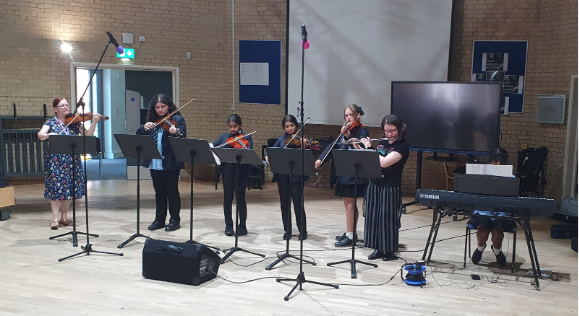
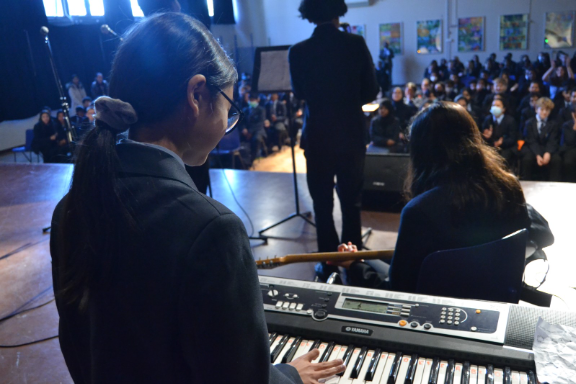
Choir, keyboard club, extra-curricular instrumental and vocal lessons, guitar group, ensemble group, trips, Rock-school workshops, Winter concert, Summer peri concerts, Culture day performances, Assembly and school event music