Music
Overview
The KS3 Music curriculum develops students’ appreciation of music through the study of a wide range of styles, genres and cultures. Students build a secure foundation in musical theory through practical performance and composition activities, with each unit integrating knowledge and skills to support progression towards KS4 Music.
Curriculum Intent
The curriculum is carefully sequenced to develop students’ musical knowledge, understanding and practical skills over time. Through exposure to diverse musical traditions and genres, students gain confidence in performing, composing and appraising music while developing transferable skills such as creativity, collaboration, critical thinking and leadership. Cross-curricular links and career connections enrich learning, ensuring that all students leave KS3 with a lasting appreciation of music and its role within society and culture.
Curriculum Implementation
-
Teaching Approach: The Music curriculum is delivered through a carefully sequenced programme that combines practical music-making with the development of theoretical knowledge. Lessons are designed to be engaging, inclusive and accessible to all students, regardless of prior musical experience. Learning is rooted in active participation through performing, composing, listening and appraising, ensuring that students develop both musical understanding and practical competence.
-
Sequencing of learning: Units are structured to build progressively on prior learning, allowing students to revisit and strengthen key concepts such as rhythm, pitch, harmony, texture and structure throughout Key Stage 3. Students are exposed to a broad range of musical genres, styles and traditions, enabling them to develop cultural awareness alongside musical knowledge. Practical activities make use of a variety of instruments, music technology and vocal work, providing opportunities for students to develop confidence as performers, composers and collaborators.
-
Assessment: Assessment is integrated throughout the curriculum through regular retrieval activities, teacher questioning, practical performances, composition projects and listening tasks. Summative assessment points are designed to evaluate both knowledge and practical application, with students receiving feedback that supports further progress. Opportunities for self-assessment and peer assessment encourage reflection and foster independent learning skills.
Curriculum Impact
The impact of the Music curriculum is evident through students' increasing confidence, musical understanding and ability to apply their knowledge in a range of practical and creative contexts. Students demonstrate progress through improved performance skills, more sophisticated compositions and a growing ability to analyse and discuss music using appropriate subject-specific terminology.
Success is measured through assessment outcomes, lesson observations, student voice, participation in enrichment opportunities and the quality of students' practical and written work. Students develop the ability to work collaboratively, think creatively and communicate effectively, whilst gaining an appreciation of music from different cultures, historical periods and traditions.
By the end of Key Stage 3, students will have developed a secure understanding of the fundamental elements of music and will be able to perform, compose and appraise with increasing independence and confidence. Those who choose to continue their musical studies into Key Stage 4 will be well prepared for further study, whilst all students will leave with a lifelong appreciation of music and its significance within society and culture.
Curriculum Structure
The Key Stage 3 Music curriculum is designed as a three-year journey that develops students' musical knowledge, skills and understanding through a balance of performance, composition, listening and appraisal activities. Each year builds upon prior learning, revisiting key concepts while introducing increasingly challenging musical content and techniques.
Key Stage 3
| Year | Topics / Units | Key Knowledge & Skills |
| 7 |
|
In Year 7, students establish the fundamental knowledge and skills required for musical study, including the elements of music, basic notation and introductory performance techniques. Students explore a variety of musical traditions and begin developing their creative compositional skills |
| 8 |
|
In Year 8, students build upon these foundations by extending their theoretical understanding, developing more advanced performance techniques and exploring a wider range of musical genres and cultural traditions. Students are introduced to music technology and opportunities for improvisation, arrangement and independent musical decision-making |
| 9 |
|
In Year 9, students further refine their performance and composition skills through the study of influential twentieth-century musical styles and contemporary music technology. Learning becomes increasingly independent and collaborative, enabling students to apply their knowledge to extended creative projects and preparing them for potential progression to Key Stage 4 Music. |
Throughout all three years, students engage with music from diverse cultures, historical periods and contexts, ensuring a broad, balanced and ambitious curriculum that promotes musical excellence, creativity and cultural understanding.
Enrichment
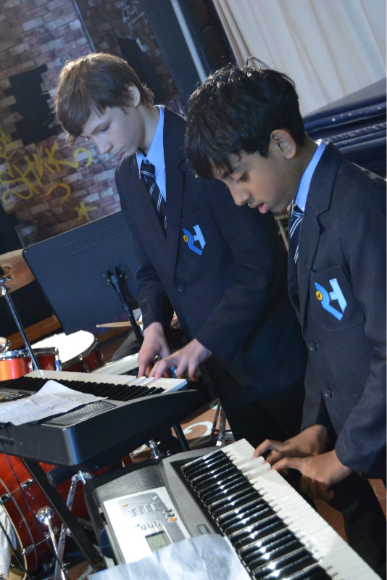
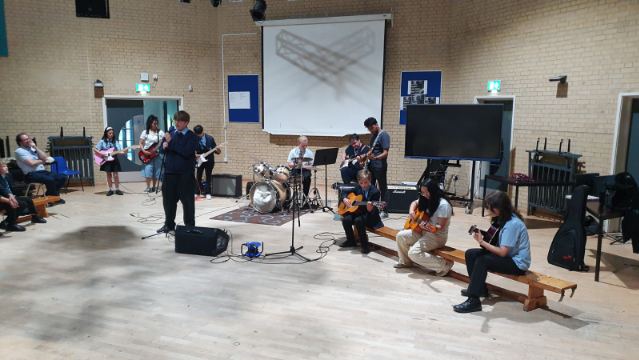
Choir, keyboard club, extra-curricular instrumental and vocal lessons, guitar group, ensemble group, trips, Battle of the bands competition, Rock-school workshops, Winter concert, Summer peri concerts, Culture day performances, Assembly and school event music