Classics - Latin
Overview
A Level Latin offers students the opportunity to develop advanced linguistic, analytical, and critical thinking skills through the study of some of the most influential texts in Western literature. Students explore both verse and prose literature in the original Latin, gaining insight into Roman culture, politics, and values. The course builds on GCSE knowledge and prepares students for further study in Classics or related humanities disciplines.
Curriculum Intent
The Latin department aims to:
-
Develop fluent and accurate translation skills from Latin into English
-
Enhance students’ understanding of Roman civilisation, literature, and thought.
-
Foster critical analysis of literary texts, including themes, style, and historical context.
-
Build independent learning skills and confidence in handling unseen translation and comprehension.
-
Cultivate appreciation of classical literature and its lasting influence.
Key knowledge and skills:
-
Secure understanding of Latin grammar (cases, verb forms, syntax, subordinate clauses)
-
Knowledge of core vocabulary required for unseen translation.
-
Foster critical analysis of literary texts, including themes, style, and historical context.
-
Close analysis of Latin texts (word choice, syntax, literary effects)
-
Constructing clear, structured arguments about the texts
Curriculum Implementation
Teaching Approach
-
Explicit teaching of language through regular translation practice
-
Close textual analysis of set texts in both Latin and English
-
Class discussion focusing on themes, literary techniques, and historical context.
-
Exam-style questions integrated regularly to develop confidence.
Sequencing of learning
-
Year 12 focuses on consolidating language skills and introducing prose and verse set texts.
-
Year 13 develops deeper literary analysis and exam preparation.
-
Unseen translation skills are developed progressively across both years.
Assessment
-
Regular vocabulary and grammar tests
-
Translation and comprehension assessments
-
Essay writing on literature texts (themes, characterisation, style)
-
Full mock examinations in Year 13
Curriculum Impact
Success is measured through:
-
Strong progress in translation accuracy and fluency
-
Development of sophisticated literary analysis in essays
-
Positive student outcomes in mock and final A Level exams
-
Student confidence in tackling unseen material.
-
Ability to engage critically with classical texts and ideas.
Curriculum Structure
Key Stage 4
| Year | Topics / Units | Key Knowledge & Skills |
| 12 | Language consolidation (grammar & syntax), introduction to unseen translation, introduction to the verse and prose literature study (verse: Virgil, Aeneid Book 4, and prose: Cicero’s Pro Roscio) | Secure knowledge of vocabulary and syntax, translation of adapted and original Latin, understanding of social and historical contexts for both the prose and verse literature |
| 13 | Advanced unseen translation, Latin scansion, continued analysis of literature (Virgil, Aeneid Book 4, and Cicero’s Pro Roscio) | Confident translation of unseen prose and verse, development of structured, critical essays, more independent analysis of literature |
Exam Board and specification Link:
OCR A Level Latin (H443)
https://www.ocr.org.uk/qualifications/as-and-a-level/latin-h043-h443-from-2016/
Enrichment:
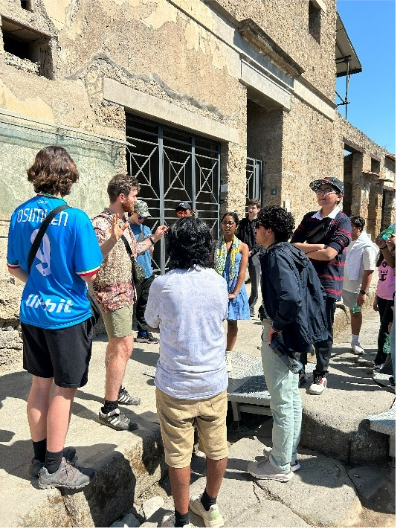
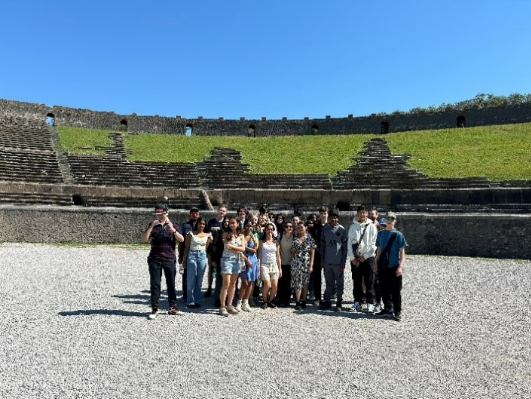
Clubs, trips