History
Overview
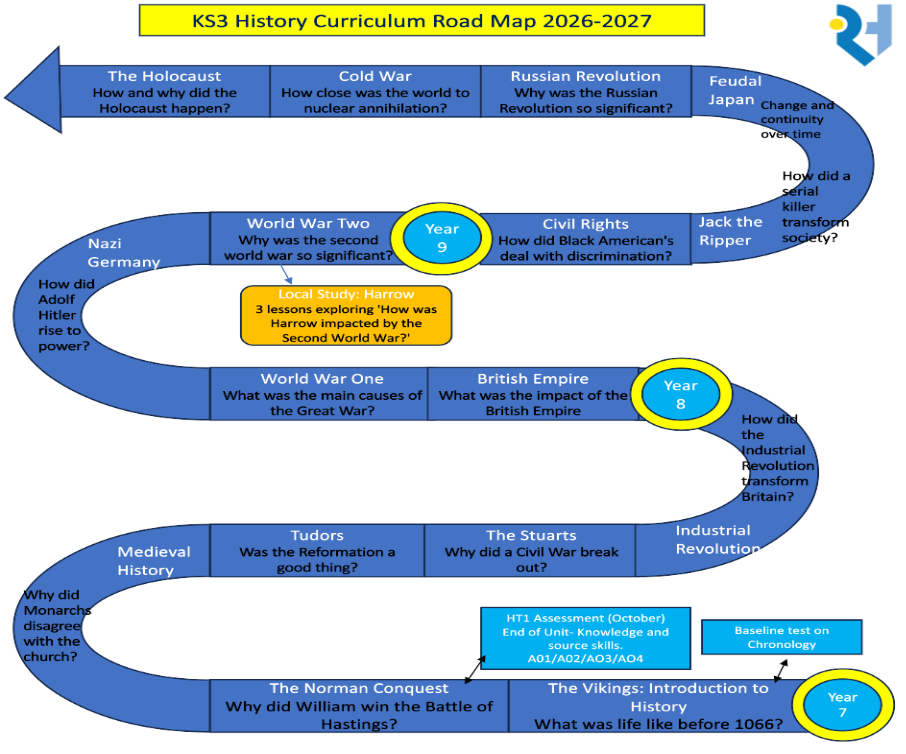
History at Key Stage 3 enables students to develop a deep understanding of Britain's past and the wider world. Through the study of people, events, societies and significant turning points, students learn how the modern world has been shaped. Across Years 7–9, students investigate topics ranging from the Norman Conquest and Medieval England to the British Empire, the World Wars, Civil Rights, the Holocaust and the Cold War. Students are encouraged to think critically, evaluate historical evidence, develop judgements and communicate their ideas effectively.
Curriculum Intent
The History curriculum provides a broad, ambitious and knowledge-rich curriculum that enables students to develop a secure understanding of Britain's past and the wider world. Through the study of diverse historical periods, societies and individuals, students gain the knowledge, skills and confidence to understand how the modern world has been shaped. The curriculum is underpinned by a culturally responsive approach, ensuring that students encounter a diverse range of voices, experiences and perspectives, helping them to make meaningful connections between the past, their own identities and contemporary society. Students build an understanding of key second-order historical concepts such as change and continuity, cause and consequence, significance, similarity and difference, historical interpretations and the use of evidence, allowing them to think and work as historians.
The curriculum aims to:
-
Develop students' chronological understanding of key historical periods from Medieval Britain to the modern world.
-
Build substantive knowledge of significant events, individuals and movements, including the Normans, Tudors, Industrial Revolution, British Empire, World Wars, Civil Rights Movement, Holocaust and Cold War.
-
Strengthen disciplinary skills such as source analysis, interpretation, historical enquiry, explanation and judgement.
-
Develop students' understanding of key second-order historical concepts, including cause and consequence, change and continuity, significance, similarity and difference, historical interpretations and the use of evidence, enabling them to think and work as historians.
-
Encourage students to analyse historical events from different perspectives and evaluate the causes, consequences and significance of change over time.
-
Promote respect, empathy and an understanding of diverse societies and cultures through the study of migration, slavery, empire, civil rights, genocide and social change.
-
Foster the fundamental British Values of democracy, the rule of law, individual liberty, and mutual respect and tolerance through the study of power, government, rights, freedoms and social justice across different historical periods.
-
Ensure that students engage with diverse historical experiences and perspectives, developing cultural awareness, inclusivity and a greater understanding of Britain's place within a global context.
-
Encourage students to become informed, active and responsible citizens who can engage critically with the world around them.
-
Prepare students for further study by developing confident historians who can construct evidence-based arguments, challenge misconceptions and make informed judgements.
This curriculum empowers students to appreciate the complexity of the past, understand its relevance to the present, and recognise their role within a diverse and democratic society.
Curriculum Implementation
Teaching Approach
-
Enquiry-led lessons centred on key historical questions that develop substantive knowledge and chronological understanding.
-
Explicit teaching and modelling of disciplinary skills, including source analysis, interpretation, explanation, evaluation and historical judgement.
-
Regular application of second-order concepts, including cause and consequence, change and continuity, significance, similarity and difference, and interpretations.
-
Teacher modelling of high-quality historical writing, enabling students to construct analytical, evidence-based arguments and judgements.
-
Use of a diverse range of sources, interpretations, artefacts and visual evidence to develop critical thinking and evidential understanding.
-
Structured oracy activities, including discussion, debate and questioning, to develop historical reasoning and communication skills.
-
Explicit teaching of subject-specific vocabulary to strengthen historical literacy and academic language.
-
Retrieval practice embedded within lessons to secure knowledge retention and support long-term memory.
-
Culturally responsive teaching that explores a range of perspectives and experiences within British and global history.
Sequencing of Learning
-
Learning is sequenced chronologically from Medieval Britain in Year 7 to twentieth-century and global history in Year 9.
-
Key themes such as power, conflict, migration, empire, democracy, equality and social change are revisited throughout Key Stage 3.
-
Historical knowledge, concepts and skills are carefully revisited and built upon to deepen understanding over time.
-
Enquiry questions are sequenced to progressively develop students' historical thinking, analysis and independent judgement.
Assessment
-
Regular formative assessment through questioning, retrieval activities, source work and extended writing.
-
Termly summative assessments that assess both historical knowledge and disciplinary skills.
-
Assessment tasks require students to analyse sources and interpretations, apply second-order concepts and develop evidence-based arguments.
-
Feedback informs next steps, addresses misconceptions and supports continuous improvement.
-
Progress is monitored over time to ensure all students are challenged and supported to achieve their potential.
Curriculum Structure
Key Stage 3
| Year | Topics / Units | Key Knowledge & Skills |
| 7 | Introduction to History, Vikings, Normans, Medieval England, Tudors, Stuarts, English Civil War, Industrial Revolution | Develop chronological understanding; analyse historical sources and evidence; understand cause and consequence, change and continuity, and significance; evaluate interpretations; explain historical events using evidence; construct analytical written arguments; understand the development of monarchy, religion, power and society in Britain. |
| 8 | British Empire, Transatlantic Slave Trade, World War I, Causes of World War II, World War II, Local History (Harrow and Bentley Priory), Post-War Britain | Investigate empire, migration and global conflict; analyse causes and consequences of war; explore historical perspectives and interpretations; evaluate the impact of empire and slavery; assess significance and historical change; develop source analysis and evidence-based judgement; understand democracy, rights and social change in modern Britain. |
| 9 | Civil Rights in America, Jack the Ripper, The Holocaust, Russian Revolution, Feudal Japan, Cold War | Examine themes of equality, justice, power and conflict; analyse complex historical interpretations; evaluate the reliability and utility of sources; investigate significance and change over time; compare different societies and political systems; construct reasoned historical arguments; develop independent enquiry and critical thinking skills through the study of modern global history. |
Enrichment:
-
Curriculum-linked visits such as the Battle of Britain Bunker and Bentley Priory Museum, helping students develop their understanding of World War II, the Battle of Britain and local history.
-
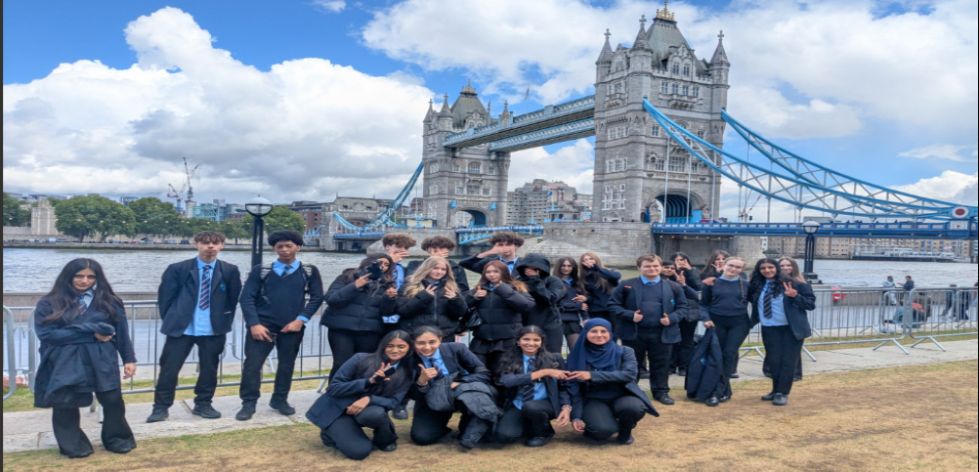
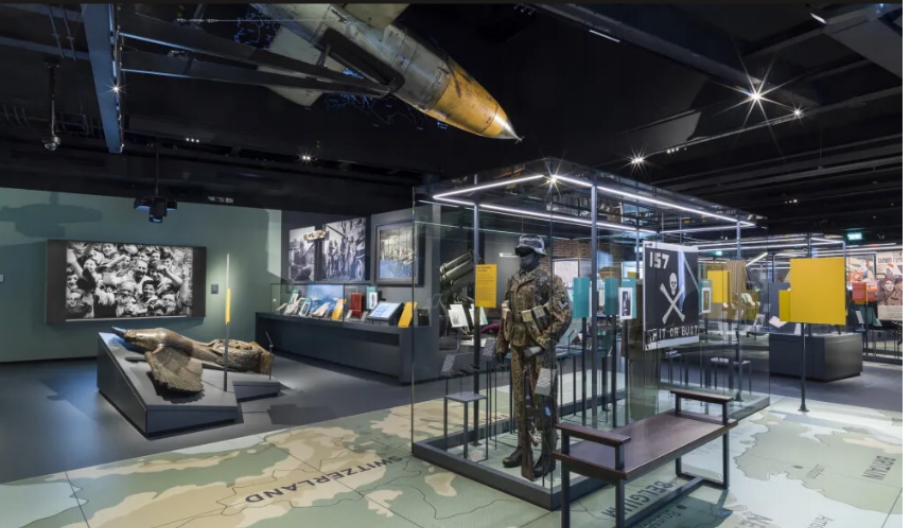
Opportunities to visit the Imperial War Museum, enriching students' study of the World Wars, the Holocaust and twentieth-century conflict through engagement with historical artefacts and exhibitions.
-
Visits to the Museum of London Docklands, supporting learning about the British Empire, migration, trade and the Transatlantic Slave Trade, enabling students to make connections between local, national and global history.