Design & Technology
Overview
GCSE Design and Technology at Key Stage 4 builds upon the principles of the National Curriculum by developing students' creativity, technical knowledge and practical skills through designing and making products that solve real-world problems. Following the AQA GCSE Design and Technology (8552) specification, students gain an understanding of core technical principles, specialist technical principles and designing and making principles, while exploring materials, manufacturing processes, systems, sustainability and emerging technologies. The curriculum encourages students to become confident, resourceful and reflective designers who can communicate ideas effectively and make informed design decisions.
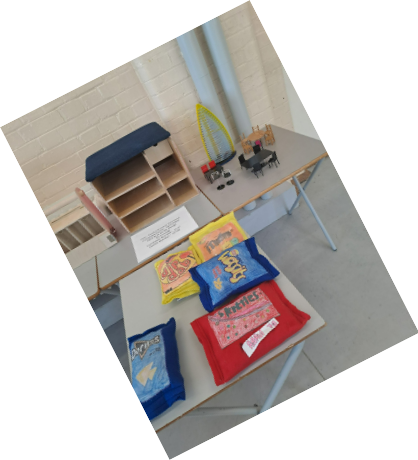
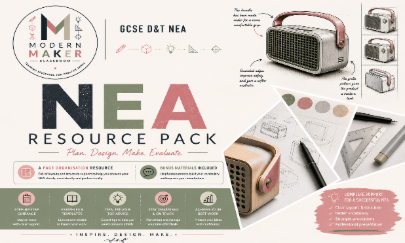
The course combines theoretical learning with practical application to develop both technical knowledge and manufacturing skills. In Year 10, students complete two mini practical projects—a pine jewellery box and an ergonomic computer mouse model—to build confidence in workshop techniques, iterative design and product evaluation before beginning their GCSE Non-Examination Assessment (NEA) in the summer term. During Year 11, students complete the NEA alongside revisiting and extending their theoretical knowledge in preparation for the written examination. Throughout the course, students develop independence, resilience and problem-solving skills, preparing them for further study, apprenticeships and careers in engineering, manufacturing, architecture, product design and the wider creative industries.
Curriculum Intent
The Design and Technology curriculum is designed to fulfil the aims of the National Curriculum by ensuring that students:
-
Develop creative, technical and practical expertise needed to perform everyday tasks confidently.
-
Design and make high-quality prototypes and products for a range of users.
-
Critically evaluate and test their own ideas and the work of others.
-
Understand how past and present designers and engineers have influenced the modern world.
-
Apply mathematical and scientific knowledge to solve practical design problems.
-
Develop an understanding of sustainability, environmental responsibility and ethical design.
-
Gain the knowledge and skills required for success in the AQA GCSE Design and Technology qualification and progression into further education or employment.
Key Knowledge and Skills
Students develop knowledge and understanding of:
-
Core Technical Principles
-
Specialist Technical Principles
-
Designing and Making Principles
-
New and emerging technologies
-
Energy generation and storage
-
Material categories and their working properties
-
Manufacturing processes
-
Mechanical devices and systems
-
Electronics and smart materials
-
CAD/CAM and digital manufacture
-
Design communication techniques
-
Iterative design
-
Testing and evaluation
-
Commercial manufacturing and quality assurance
-
Sustainability, environmental impact and responsible design.
Students also develop practical skills in:
-
Measuring and marking out accurately
-
Safe use of workshop tools and machinery
-
Woodworking techniques
-
Modelling and prototyping
-
CAD drawing and modelling
-
Product manufacture
-
Testing and evaluation
-
Technical drawing and design communication
Curriculum Implementation
Teaching Approach
The curriculum combines explicit teaching of theoretical knowledge with regular practical application. Teacher demonstrations, modelling, retrieval practice, design challenges and iterative practical projects ensure that students continually apply their understanding within realistic design contexts. Practical activities develop increasing independence whilst reinforcing the theoretical principles required for examination success.
Sequencing of Learning
Learning progresses from fundamental workshop skills and material knowledge in Year 10 towards increasingly independent designing and manufacturing. The two mini-NEA practical projects introduce students to every stage of the design process before they undertake the full GCSE Non-Examination Assessment. Year 11 focuses on completing the NEA whilst consolidating the full specification through structured revision and examination practice.
Assessment Strategies - Assessment includes:
-
Retrieval quizzes
-
Regular formative assessments
-
Knowledge organisers
-
End of unit assessments
-
Practical project assessments
-
Design portfolio reviews
-
Mock examinations (year 10&11)
-
GCSE NEA milestone reviews
-
Formal GCSE written examination
Curriculum Impact
Students leave the course with:
-
Secure understanding of the AQA GCSE specification.
-
High-quality practical manufacturing skills.
-
Confidence using workshop tools, machinery and CAD.
-
Strong analytical and evaluative skills.
-
Excellent preparation for further study and careers in Design, Engineering and Manufacturing.
Suggested Textbooks:
-
AQA GCSE Design and Technology (Illuminate Publishing / PG Online editions as appropriate).
-
CGP GCSE Design & Technology Revision Guide.
Useful Websites (Direct Links):
-
BBC Bitesize (GCSE Design & Technology)
https://www.bbc.co.uk/bitesize
(Provides revision guides, quizzes and videos for GCSE subjects including Design & Technology) [resources....uqas.co.uk]
-
Seneca Learning
https://senecalearning.com/
(Free interactive GCSE revision platform covering AQA Design & Technology and other subjects) [senecalearning.com]
-
Oak National Academy (KS4 Design & Technology)
https://www.thenational.academy
(Fully sequenced lessons and curriculum resources aligned to the National Curriculum)
-
Technologystudent.com
http://www.technologystudent.com/
(Comprehensive Design & Technology resource site with materials, processes and theory content)
Exam board and specification link:
-
AQA GCSE Design and Technology (8552)
https://www.aqa.org.uk/subjects/design-and-technology/gcse/design-and-technology-8552
Enrichment
-
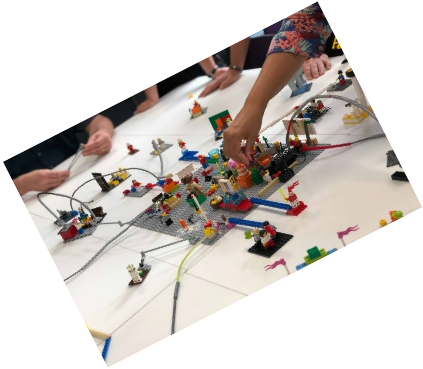
Clubs – Lego and DT and NEA enrichment