Business Studies
Overview
Edexcel GCSE Business introduces students to how businesses operate in the real world. It focuses on key areas such as enterprise, marketing, finance, operations, and human resources. Students develop an understanding of how businesses start, grow, and make decisions, as well as how external factors (e.g. economy, competition) affect them. The course combines theory with real-life case studies to help students apply knowledge to practical situations.
Curriculum Intent
The Business curriculum aims to:
-
Develop students’ understanding of business concepts, terminology, and decision-making
-
Build analytical and evaluation skills through real-world case studies
-
Encourage entrepreneurial thinking and problem-solving
-
Improve financial literacy and understanding of data
-
Prepare students for further study or employment
Key knowledge and skills:
-
Knowledge of business activity, marketing, operations, finance, and HR
-
Skills in analysing data, interpreting information, and making justified decisions
-
Confidence in evaluating business scenarios and writing structured exam answers
Curriculum Implementation
Teaching approach
-
Use of real-life business examples and case studies
-
Interactive lessons (discussion, problem-solving tasks, mini projects)
-
Exam practice with focus on command words (e.g. explain, analyse, evaluate)
-
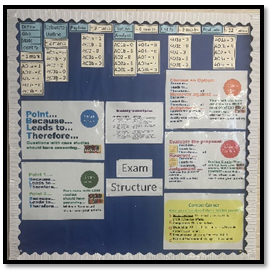
Scaffolding for extended writing (e.g. PBLT paragraphs)
-
Use of data (graphs, charts, financial figures)
Sequencing of learning
-
Start with enterprise and basics of business ownership
-
Move into key functional areas (marketing, operations, finance, HR)
-
Build towards decision-making and business growth
-
Increase complexity from knowledge recall → application → evaluation
Assessment
-
Regular low-stakes quizzes to check knowledge
-
End-of-topic assessments using GCSE-style questions
-
Mock exams in Year 10 and Year 11
-
External final assessment: 2 written exams (Theme 1 & Theme 2, 50% each)
Curriculum Impact
How success is measured:
-
Student progress in assessments and mock exams
-
Improvement in extended writing and exam technique
-
Ability to apply knowledge to case studies
-
Student voice showing confidence in business concepts
-
High-quality written answers demonstrating analysis and evaluation
Curriculum Structure
Key Stage 3
| Year | Topics / Units | Key Knowledge & Skills |
| 10 |
Theme 1: Investigating Small Business - Enterprise & Entrepreneurship - Spotting a Business Opportunity - Putting a Business Idea into Practice - Making the Business Effective - Understanding External Influences |
- Understanding business aims and objectives - Market research and target market - Business ownership types - Basic financial concepts (revenue, costs, profit, cash flow) - Marketing mix - Developing exam skills (describe, explain, analyse and justify) |
| 11 | Theme 2: Building a Business - Growing the Business - Making Marketing Decisions - Making Operational Decisions - Making Financial Decisions - Making Human Resource Decisions |
Calculating and analysing financial data (ARR, profit margins) - Economies of scale - Advanced marketing strategies - Operations (quality, productivity) - HR (recruitment, training, motivation) - Evaluation skills for 12-mark questions |
Exam Board and specification link:
Pearson Edexcel Level 1/Level 2 GCSE (9-1) in Business (1BS0)
https://qualifications.pearson.com/en/qualifications/edexcel-gcses/business-2017.html
Useful Websites:
https://senecalearning.com/en-GB/
https://www.bbc.co.uk/bitesize/subjects/zpsvr82
Enrichment:
Clubs and trips.